Read this if you want to understand the new lease accounting standard.
What is ASC 842?
ASC 842, Leases, is the new lease accounting standard issued by the Financial Accounting Standards Board (FASB). This new standard supersedes ASC 840. For entities that have not yet adopted the guidance from ASC 842, it is effective for non-public companies and private not-for-profit entities for reporting periods beginning after December 15, 2021.
ASC 842 (sometimes referred to as Topic 842 or the new lease standard) contains guidance on the accounting and financial reporting for agreements meeting the standard’s definition of a lease. The goal of the new standard is to:
- Streamline the accounting for leases under US GAAP and better align with International Accounting Standards lease standards
- Enhance transparency into liabilities resulting from leasing arrangements (particularly operating lease contracts)
- Reduce off-balance-sheet activities
What is the definition of a lease under the new standard?
ASC 842 defines a lease as “A contract, or part of a contract, that conveys the right to control the use of identified property, plant, or equipment (an identified asset) for a period of time in exchange for consideration.”
This definition outlines four primary characteristics to consider: 1) an identified asset, 2) the right to control the use of that asset, 3) a period of time, and 4) consideration.
(For a deeper dive into what constitutes a lease, you can download the BerryDunn lease accounting guide here.)
How will this affect your organization?
Time to implement: What do you need to do next?
The starting place for implementation is ensuring you have a complete listing of all known lease contracts for real estate property, plant, and equipment. However, since leases can be in contracts that you would not expect to have leases, such as service contracts for storage space, long-term supply agreements, and delivery service contracts, you will also need to broaden your review to more than your organization’s current lease expense accounts.
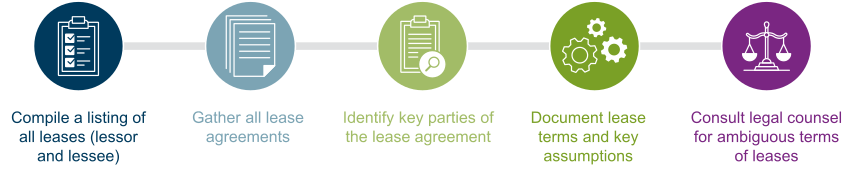
We recommend reviewing all expense accounts to look for recurring payments, because these often have the potential to have contracts that contain a lease. Once you have a list of recurring payments, review the contracts for these payments to identify leases. If the contract meets the elements of a lease—a contract, or part of a contract, that conveys the right to control the use of identified property, plant, or equipment (an identified asset) for a period of time in exchange for consideration—your organization has a lease that should be added to your listing.
Additionally, your organization is required to consider the materiality of leases for recognition of ASC 842. There are no explicit requirements (that, of course, would make things too easy!). One approach to developing a capitalization threshold for leases (e.g., the dollar amount that determines the proper financial reporting of the asset) is to use the lesser of the following:
- A capitalization threshold for PP&E, including ROU assets (i.e., the threshold takes into account the effect of leased assets determined in accordance with ASC 842)
- A recognition threshold for liabilities that considers the effect of lease liabilities determined in accordance with ASC 842
Under this approach, if a right-of-use asset is below the established capitalization threshold, it would immediately be recognized as an expense.
It's important to keep in mind the overall disclosure objective of 842 "which is to enable users of financial statements to assess the amount, timing, and uncertainty of cash flows arising from leases". It's up to the organization to determine the level of details and emphasis needed on various disclosure requirements to satisfy the disclosure objective. With that objective in mind, significant judgment will be required to determine the level of disclosures necessary for an entity. However, simply put, the more extensive the organization's leasing activities, the more comprehensive the disclosures are expected to be.
Don't wait, download our lease implementation organizer (Excel file) to get started today!
Key takeaways and next steps:
- ASC 842 is effective for reporting periods beginning after December 15, 2021
- Establish policies and procedures for lease accounting, including a materiality threshold for assessing leases
- Develop a system to capture data related to lease terms, estimated lease payments, and other components of lease agreements that could affect the liability and asset being reported
- Evaluate if bond covenants or debt limits need to be modified due to implementation of this standard
- Determine if there are below market leases/gifts-in-kind of leased assets
If you have questions about finance or operating leases, or need help with the new standard, BerryDunn has numerous resources available below and please don’t hesitate to contact the lease accounting team. We’re here to help.
Lease accounting resources